

Can Grass Grow in Colorado Mountain Environments?
The short answer is yes, but it isn’t always the best choice.
Many homeowners moving to the Colorado foothills expect to have a lush green lawn similar to what they may have had in the suburbs. While grass can grow in many mountain communities, the unique conditions found in places like Evergreen, Conifer, Morrison, and Golden often make maintaining a traditional lawn far more challenging.
That’s why many mountain homeowners choose natural stone, boulder landscaping, artificial turf and drought-tolerant plantings that thrive in Colorado’s environment while requiring significantly less maintenance.
Why Is Growing Grass More Difficult in the Mountains?
Mountain properties experience conditions that are very different from neighborhoods on the Front Range. Common challenges include:
Rocky or shallow soils
Steep slopes
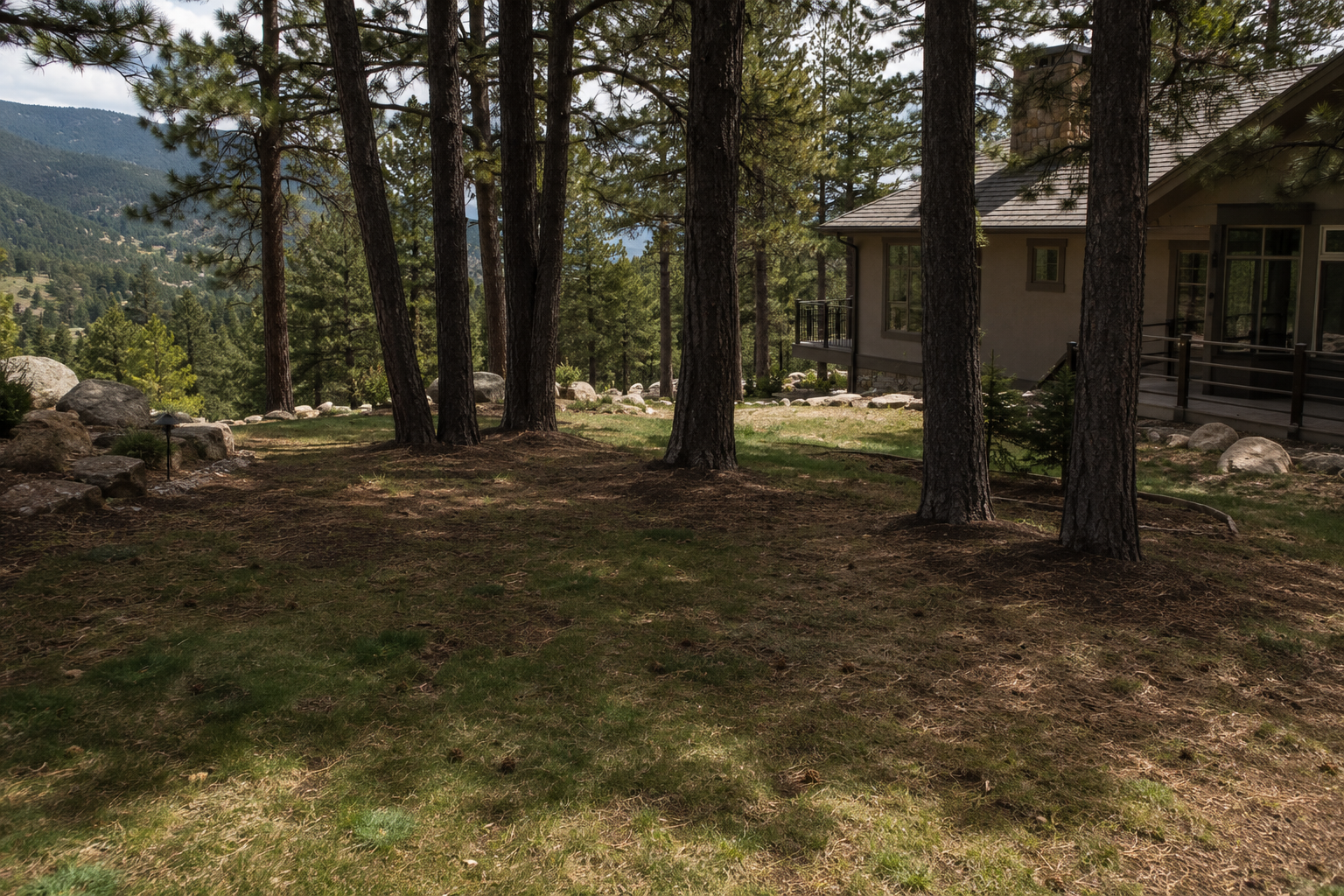
Heavy tree cover and shade
Limited irrigation access
Dry air and low humidity
Wildlife traffic
Long winters and short growing seasons
Even when grass grows successfully, it often requires more watering, fertilization, and ongoing care than many homeowners expect.
Sunlight Makes a Big Difference
Many mountain homes are surrounded by mature pine trees and native forests. While these trees create beautiful scenery, they also produce significant shade. Most turf grasses require several hours of direct sunlight each day to remain healthy. In heavily shaded areas, grass may become:
Thin
Patchy
Susceptible to moss
More vulnerable to disease
Easily damaged by foot traffic
Understanding how sunlight moves across your property is an important part of landscape planning.
Water Is Often the Biggest Challenge
Colorado’s mountain climate is naturally dry. Even during spring and summer, rainfall can be inconsistent, and maintaining a healthy lawn often requires supplemental irrigation. For many homeowners, the amount of water needed to keep traditional grass green simply isn’t practical or desirable.
Using drought-tolerant landscaping can dramatically reduce water usage while creating an outdoor space that looks more natural and complements the surrounding environment.
Slopes Make Lawn Maintenance More Difficult
Many foothill properties include significant elevation changes. Steep slopes make mowing difficult and can contribute to:
Soil erosion
Water runoff
Uneven irrigation
Poor grass establishment
Instead of trying to maintain grass on steep hillsides, many homeowners choose boulder retaining walls, terraced planting areas, natural stone, and native groundcovers that are better suited to the terrain.
What Are the Best Alternatives to Traditional Grass?
For many mountain properties, a combination of hardscaping and drought-resistant landscaping provides the best long-term results. Popular alternatives include natural boulder landscapes, decorative rock mulch, native shrubs, drought-tolerant perennials, groundcovers, stone pathways, terraced planting beds or wildflower gardens.
These designs often require less maintenance while blending beautifully with Colorado’s mountain scenery.
Can You Still Have Some Grass?
Absolutely. Many homeowners choose to install smaller lawn areas where grass makes the most sense, such as children’s play spaces, pet areas, small backyard gathering spaces and sunny, relatively flat sections of the property. Rather than covering the entire landscape with turf, grass becomes one part of a thoughtfully designed outdoor space.