

What Makes Mountain Landscaping Different From Suburban Landscaping?
A flat backyard in the suburbs and a mountainside property in Evergreen may technically both need “landscaping,” but the similarities usually end there.
Mountain landscaping comes with a completely different set of challenges. Steep slopes, rocky soil, wildlife, elevation changes, drainage issues, and harsh Colorado weather all require a specialized approach.
A successful mountain landscape isn’t about forcing a traditional yard into a rugged environment — it’s about designing with the land.
Reason #1 – Mountain Properties Are Rarely Flat
One of the biggest differences between suburban landscaping and mountain landscaping is elevation. Many suburban yards start with a relatively flat piece of land. Mountain homes often sit on:
Steep hillsides
Rocky slopes
Uneven terrain
Natural drainage paths
Exposed granite and native stone
Instead of fighting these features, mountain landscape design works with them.
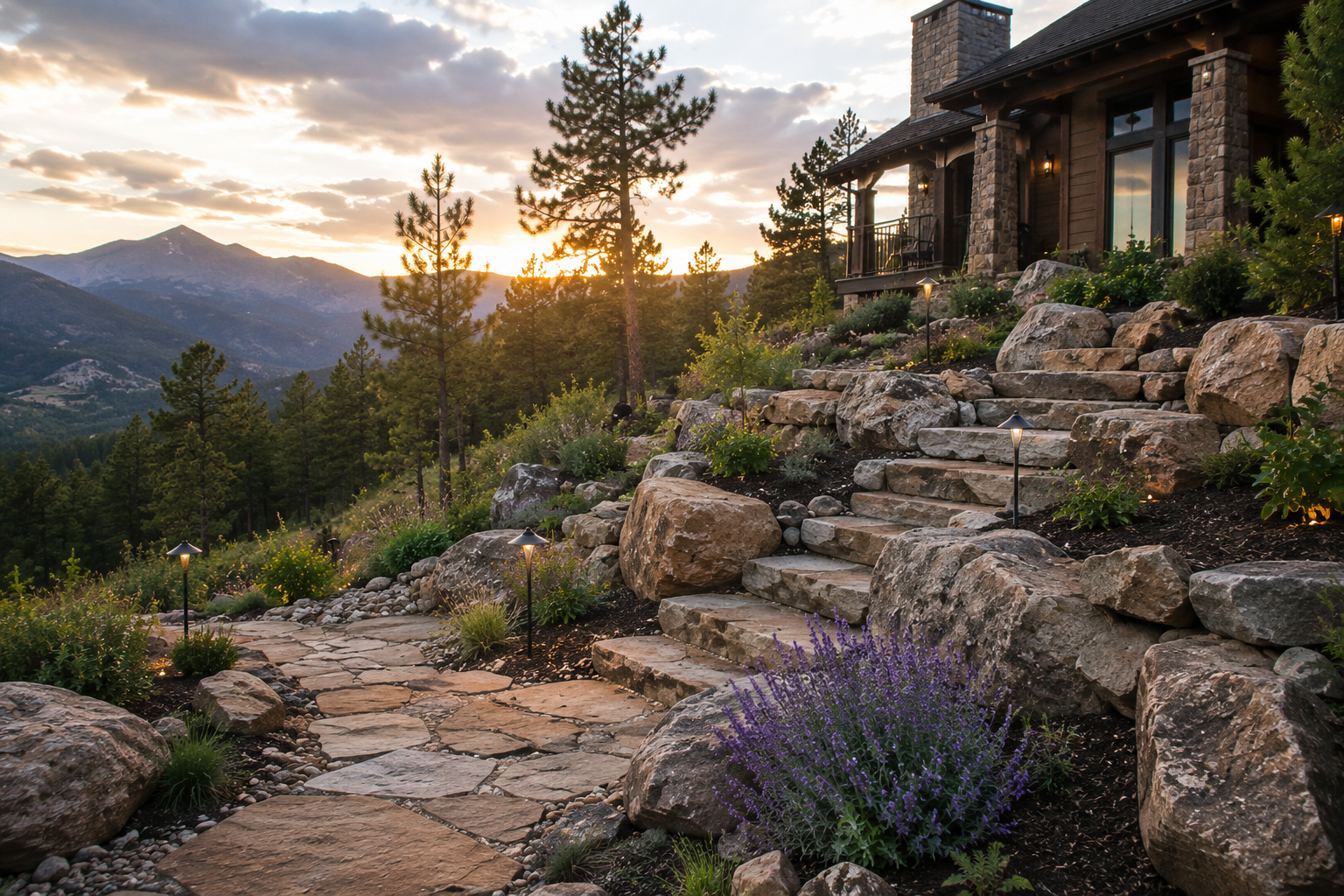
Boulder retaining walls, natural stone steps, terraced areas, and carefully planned grading can transform challenging slopes into usable and beautiful outdoor spaces.
Reason #2 – Drainage Is More Important in the Mountains
Water behaves differently on mountain properties. Heavy spring snowmelt, afternoon thunderstorms, and steep grades can quickly create erosion problems if water is not properly managed. Common mountain drainage challenges include:
Soil washing away from hillsides
Driveway erosion
Water flowing toward foundations
Washed-out planting areas
Unstable slopes
Professional mountain landscaping considers how water naturally moves across your property and creates solutions that help protect it long-term.
Large boulder walls, proper grading, drainage rock, and natural drainage channels can help control water while maintaining the beauty of the landscape.
Reason #3 – Boulder Landscaping Fits the Natural Environment
Traditional suburban landscapes often rely on manufactured materials, decorative blocks, or highly structured designs. In the Colorado foothills, natural materials usually look and perform better. Large boulders provide:
Long-lasting structural support
Natural erosion control
A timeless mountain appearance
Low-maintenance beauty
Better integration with surrounding terrain
When placed correctly, a boulder retaining wall or natural stone feature looks like it has always been part of the property.
Reason #4 – Mountain Landscapes Must Handle Colorado Weather
The foothills experience conditions that can be tough on traditional landscaping materials:
Intense UV exposure
Heavy snow loads
Freeze and thaw cycles
Dry summers
Sudden temperature changes
Materials that work well in a suburban neighborhood may crack, shift, fade, or fail more quickly at elevation.
Natural stone is one of the reasons boulder landscaping is so popular in Colorado — it is built for the environment.
Reason #5 – Plant Selection Requires a Different Approach
Mountain landscapes also require a different mindset when choosing plants. Instead of high-maintenance landscapes that require constant watering, many Colorado homeowners prefer designs using drought-resistant plants that can handle local conditions. Important considerations include:
Elevation
Sun exposure
Wildlife resistance
Water needs
Soil conditions
Winter durability
Native and drought-tolerant plants can soften stone features while creating a landscape that feels connected to the surrounding forest and foothills.
Reason #6 – Wildlife Is Part of the Design Process
Mountain homeowners share their environment with deer, elk, rabbits, and other wildlife. This means landscaping decisions should consider:
Plant protection
Natural movement areas
Durable materials
Low-maintenance designs
A successful mountain landscape works alongside nature rather than trying to completely control it.
Reason #7 – Creating Outdoor Living Spaces on Mountain Terrain
One of the biggest opportunities with mountain landscaping is transforming difficult terrain into usable space. With the right design, steep or uneven areas can become:
Outdoor seating areas
Terraced gardens
Stone pathways
Fire pit areas
Natural gathering spaces
Scenic viewpoints
The goal is not just improving appearance — it’s making your property more functional.
Reason #8 – Mountain Landscaping Requires Mountain Experience
Designing and building landscapes in Evergreen, Conifer, Morrison, Genesee, and surrounding foothill communities requires an understanding of Colorado terrain.
The best mountain landscapes are built around the land itself — using natural stone, thoughtful grading, proper drainage, and materials designed to last.
Colorado Nature Design specializes in custom boulder work, retaining walls, natural stone features, and mountain landscapes built specifically for Colorado properties.
If your property has steep slopes, erosion concerns, or unused outdoor space, we can help create a landscape that looks natural and stands the test of time.
Call Colorado Nature Design today at 303.670.8252 to discuss your mountain landscaping project.